
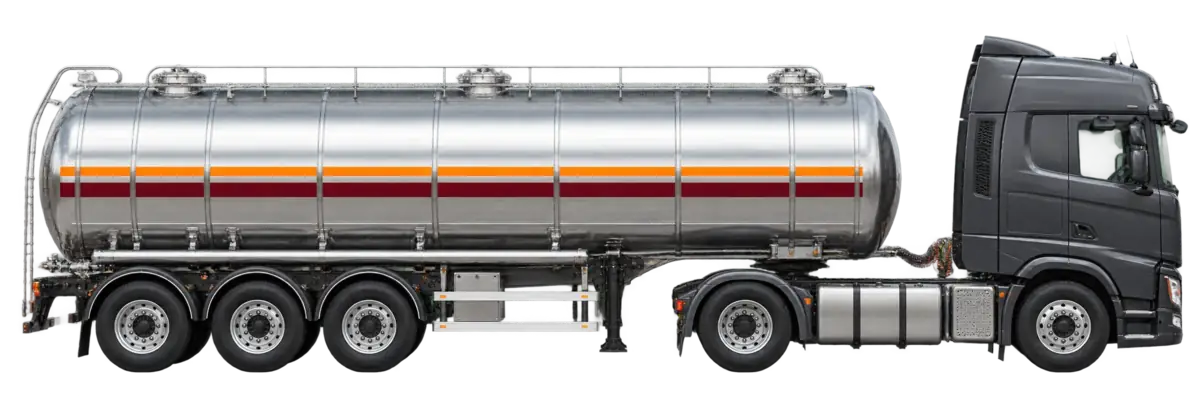

Matching cargo, equipment and route requirements
A working outline for reviewing liquid cargo compatibility, loading conditions and the equipment assigned to the movement.

- Cargo compatibility
- Equipment match
- Loading conditions
Cargo compatibility comes first
The cargo description must be clear enough to review the tank, fittings, previous-load condition and handling method. Product name alone is not an equipment instruction.
Relevant product, cleaning and documentation requirements should be confirmed before capacity is treated as available for the movement.

Match equipment to loading conditions
Loading and discharge points determine more than the vehicle type. Connection format, pumping arrangement, access, safe positioning and operating window all affect the equipment match.
A suitable tanker is therefore the outcome of a cargo-and-site review, not only a volume calculation.
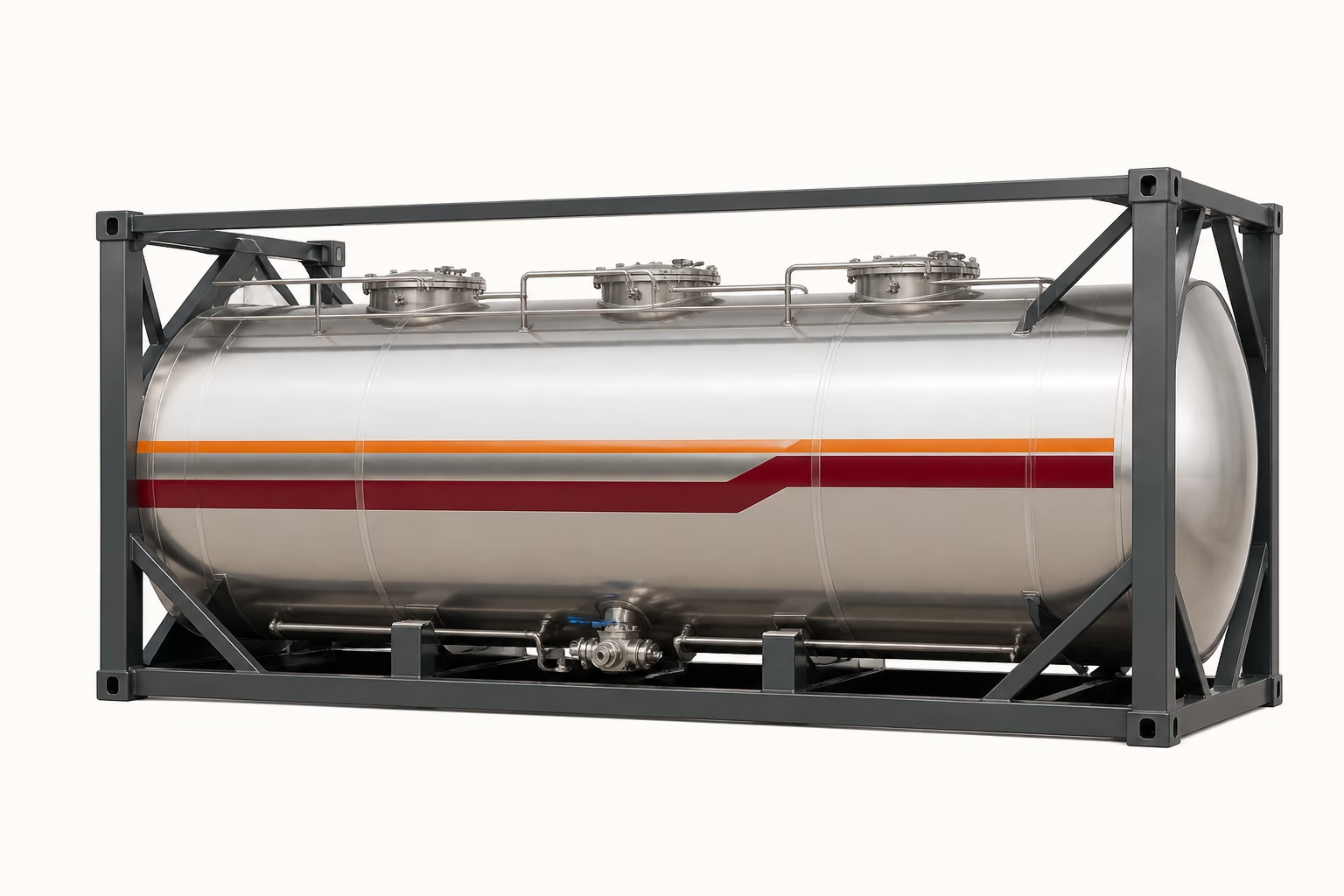
Confirm the route before the vehicle moves
The planned route must support the assigned equipment and the confirmed timing. Access restrictions, terminal instructions and handover contacts need to be aligned with dispatch.
If one condition changes, the movement returns to review so the cargo, equipment and route remain one connected decision.
A tanker movement is ready only when the cargo profile, assigned equipment, loading interface and route conditions agree.




.png)